
Sarvatobhadra Chakra: How to Read Vedha and Five-Year Transits
17 November 2026
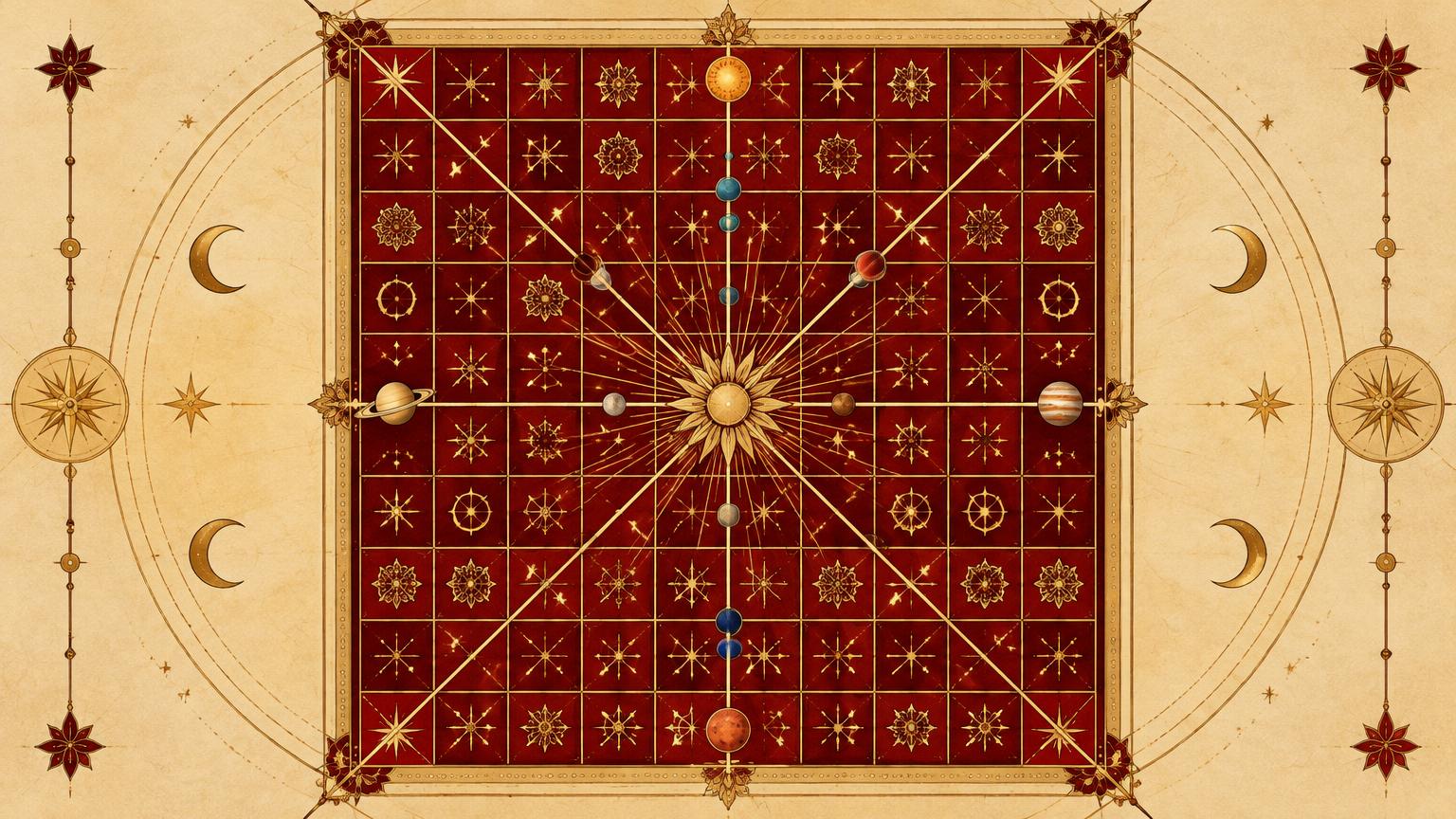
The Sarvatobhadra Chakra is a 9 × 9 grid in which the nakshatras, vowels, consonants, tithis, weekdays and signs all share one square. A planet standing in a nakshatra “pierces” other cells along fixed lines - this piercing is called vedha. Astrometry’s Sarvatobhadra Chakra software builds a personal chakra, marks your sensitive points and tracks vedhas across five years of stored transits. This guide explains how to read it.
How the 9 × 9 chakra is laid out
The outer ring holds the 28 nakshatras, including Abhijit, which most other systems leave out. Inside sit the vowels (swaras), consonants (aksharas), the signs, the tithi groups and the weekdays. Because every cell sits on the same grid, a single planet can touch your birth star, the first letter of your name and your birth tithi at the same time.
Your sensitive points: birth and name
The software marks points from the birth details - such as the Janma nakshatra, tithi group, weekday and sign - and from the name, using its first akshara and the mapped swara. That is why the name you enter matters: use the name you are actually known by, written the way it is pronounced. For a deeper look at your birth star itself, see our Nakshatra Readings or the free Nakshatra Finder.
The four kinds of vedha
- Front vedha: a straight line from the planet’s nakshatra across the grid.
- Left and right vedha: the two diagonals that start from the same cell.
- Corner vedha: the link between particular nakshatras and the corner cells.
Every cell on those lines is touched. When the report says a planet “presses” or “pierces” a point, a malefic is casting vedha on it; when it “supports” a point, a benefic is. One vedha by itself is mild. Several on the same point, especially from slow planets, carry more weight.
Reading the five-year transit forecast
The forecast walks through each year and summarises which sensitive points are under pressure or support, then lists the dated events behind that summary. Read the yearly summary first, then open the event list to see which planet, which point and which kind of vedha produced it. Saturn, Rahu, Ketu and Jupiter dominate because they stay in a nakshatra longest.
The mundane and generic outlook
A separate tab reads the chakra without reference to any person. It charts weekly pressure on the world chakra against the five-year average - above the line is calmer, below is more turbulent - and names the most turbulent weeks. You can also add entities such as a company, town or project and read them through their names, which suits mundane work alongside Medini Jyotish.
Practical tips
- Check vedhas on your birth star and name letter first; they are the most personal points.
- Compare a pressured window with your running dasha before drawing a conclusion. The Vimshottari Dasha calculator helps here.
- Use the Navtara software to compare the day-level tara of a date with the chakra’s longer picture.
Access and Desktop Edition
The chakra foundation is free. The complete editable report and PDF can be bought per report, are unlimited with the annual software pass and are included in Professional. Sarvatobhadra Chakra is also one of the 17 programs in the Desktop Essential package, which works offline after activation. See the pricing page for current prices.