
Ashtakavarga: How to Read BAV, SAV and Transit Strength
17 September 2026
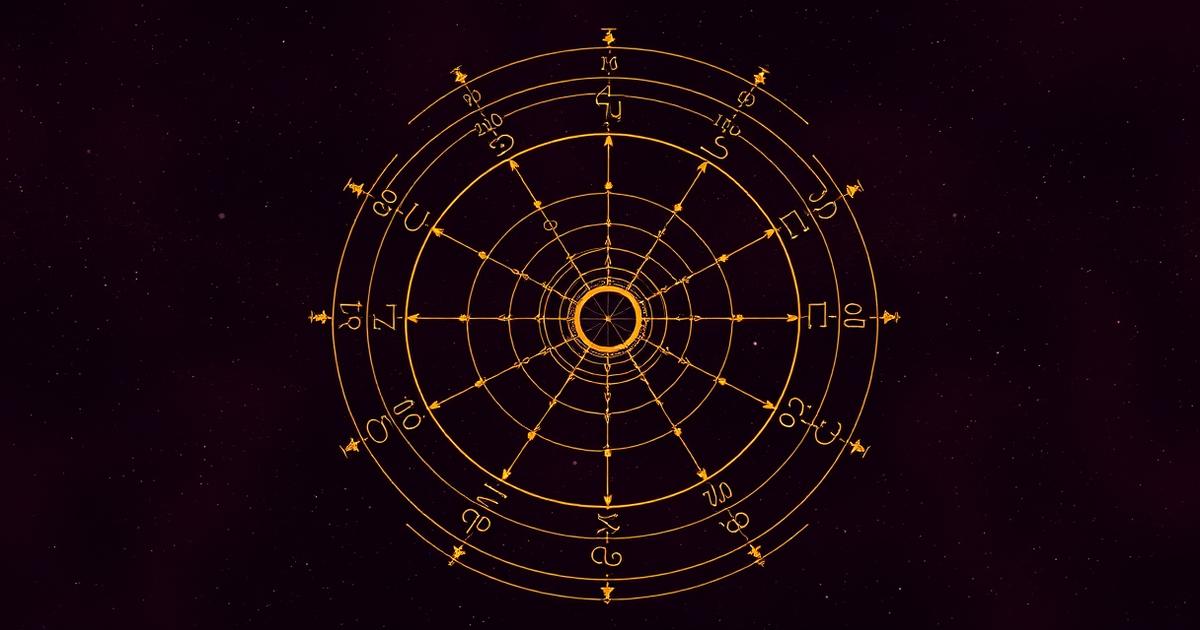
Ashtakavarga is a classical Vedic astrology framework that assigns bindus and rekhas to zodiac signs according to defined relationships between planets and reference points. Its tables can look intimidating, but the reading process becomes clearer when three layers are kept separate: Bhinnashtakavarga, Sarvashtakavarga and the transit being studied.
This guide focuses on method. It does not treat a score as a guarantee of wealth, health or any event. Astrology is a traditional interpretive practice and is not a substitute for professional advice.
The three terms to understand first
Bhinnashtakavarga or BAV
Each contributing planet has its own twelve-sign table. The bindus in a planet's BAV are used when examining that planet's transit through different signs. A Saturn BAV score and a Jupiter BAV score answer different questions; they should not be merged casually.
Sarvashtakavarga or SAV
SAV adds the planetary BAV scores sign by sign to provide a consolidated twelve-sign distribution. It is often used to compare the relative support available in different sectors of the chart.
Prastara and Kakshya
Prastara shows which contributor supplied a bindu. Kakshya divides a sign into eight parts and is used for finer transit study. These layers explain why two signs with the same total can have different internal patterns.
Start with the chart, not the score
Generate the natal chart and confirm the ascendant. A SAV score belongs to a sign; its life meaning depends on which house that sign occupies from the ascendant. The same sign can represent career for one ascendant and partnership for another.
Use the Ashtakavarga Analysis to view BAV, SAV, Prastara and transit tables together. Keep your Kundli open so that signs are translated into the correct houses.
How to read SAV responsibly
- Note the SAV total for each sign.
- Compare signs within the same chart rather than relying only on universal cut-offs.
- Map each sign to its house from the ascendant.
- Check the house lord and natal occupants.
- Use the score as supporting evidence, not a verdict.
A relatively higher score is traditionally read as greater ease or available support in that sign. A relatively lower score can indicate an area requiring more care, effort or realistic expectations. It does not mean that the house is destroyed, nor does a high score cancel every difficult natal factor.
Use the correct BAV for a transit
When Jupiter transits a sign, examine Jupiter's BAV contribution for that sign, the SAV total, Jupiter's natal condition and the houses Jupiter rules. For Saturn, use Saturn's BAV and then add the same natal context. This prevents a common error: reading a large SAV number as if every transiting planet must behave identically there.
| Layer | Question it helps answer |
|---|---|
| Natal chart | What life area and underlying promise are involved? |
| Planetary BAV | How supportive is this sign for this planet's transit? |
| SAV | How does the sign compare with other signs in this chart? |
| Dasha | Is the planet or life area active in the timing sequence? |
| Current transit | When does the planet enter, leave or change a finer division? |
A worked method without a prediction shortcut
Suppose Jupiter is transiting the sign that forms the tenth house. First identify the natal tenth house, its lord and any occupants. Then inspect Jupiter's BAV for that sign and its SAV total. Next ask whether Jupiter, the tenth lord or related houses are active in the Dasha. Finally, compare the dates of Jupiter's motion with actual career circumstances.
This sequence may support a period of greater opportunity, responsibility or visibility, but the exact expression depends on the natal chart and real-world action. A transit does not promise a particular job or financial result.
What Ashtakavarga does not tell you alone
- It does not identify a complete event without house, lord and timing context.
- It does not replace the natal dignity and lordship of the transiting planet.
- It does not make every high-scoring house permanently easy.
- It does not justify health, investment or legal decisions without qualified advice.
Track a transit as a timeline
For practical study, record the entry date, retrograde phases, direct motion and exit date of the planet. Add the BAV and SAV values beside each phase, then keep notes on observable themes. The daily transit tool helps identify current positions. This journal method is more useful than forcing one event to fit a number after the fact.
Frequently asked questions
Is a high SAV score always good?
No. It is one measure of relative support. The house, lord, occupants, Dasha and the nature of the transit still matter.
Should I read SAV or BAV first?
For a specific planet's transit, begin with that planet's BAV and use SAV as broader context. For an overview of house distribution, SAV is a convenient starting point.
Why do two calculators show different values?
Check settings, ayanamsha, included contributors and birth data. Use one clearly documented calculation method for comparisons rather than mixing tables from different settings.
For the foundation before this workflow, read Ashtakavarga Bindus Explained.